
Weekend One
Level 1
Foundations & the Back Body
Seated · Side-Lying · Prone
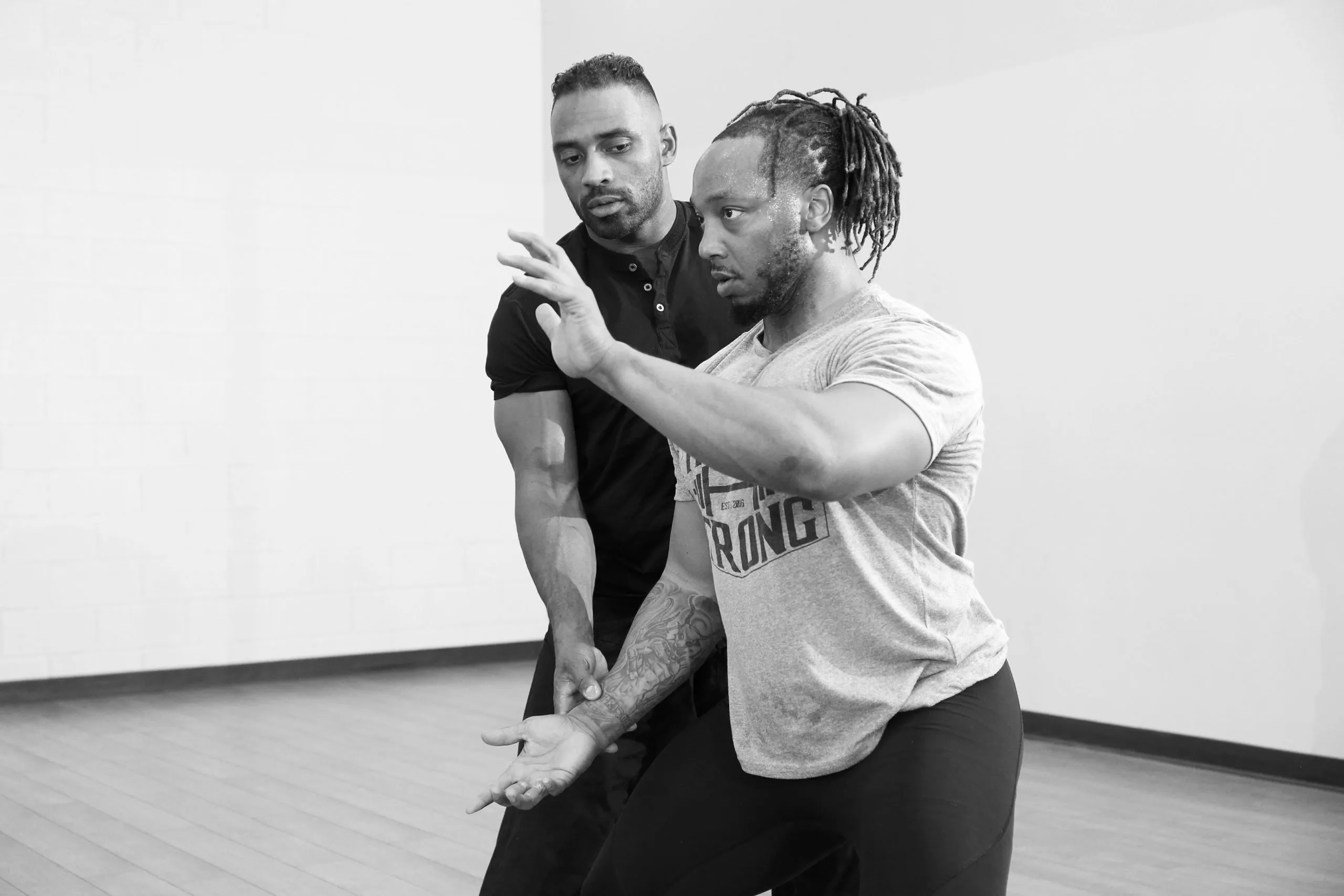
PEB Training · Phoenix, AZ
Most massage feels great for two days. Performance Enhancing Bodywork changes how the body moves — and it’s easier on your hands. Two weekends, one Certification Day, taught by De’Maris Parker.
Why PEB
That’s not because the work was bad. It’s because it stopped halfway. A muscle doesn’t let go because you pushed hard enough — it lets go because the nervous system decided it was safe to. If the brain doesn’t learn what to do with the new range, it takes it back.
PEB finishes the job. Every region of the body runs through the same loop, in the same order, so the change holds. And because the method runs on leverage instead of grip strength, it’s the first work a lot of therapists find they can do all day without paying for it in their thumbs.
The Method
Quiet the guarding with sustained pressure, prying, shear and inhibition. Not force. Permission.
Wake up what was switched off with brief, easy contractions against your hand.
The client moves through the new range on their own, so the nervous system keeps it.
The Foundation
If a technique isn’t working, one of these got broken. Every time.
Your hands listen before they lead. The body tells you where to go if you give it a second to talk.
Stance, stacked joints and body weight do the work. Your thumbs last a career instead of five years.
Tissue lets go when the brain feels safe. You don’t take range — you earn it.
The Format
Hands-on time in the room, guided practice in between. Six to eight weeks separate each step, so the work gets into your hands before you add more.
Weekend One
Foundations & the Back Body
Seated · Side-Lying · Prone
Weekend Two
Supine & Integration
Hips · Arms · Neck · Feet · Full Body
One Saturday
Practical by day, Graduation Night by night
40 logged practice hours required
CE approval pending (NCBTMB). Submitted: Level 1 = 18 hrs, Level 2 = 19 hrs, in person.
The Curriculum
Foundations first, then the body by position: seated, side-lying, prone, then supine. Review is built in at every stage. 126 short video lessons back up every session.
Before a single technique, you learn the three things that make every technique work: how to touch so the body trusts you, how to stay connected while you work, and how to use posture and leverage so your body weight does the work instead of your thumbs. This is the session every other session leans on.
This is the idea the whole method stands on. Most tight muscles aren't short, they're guarding, and the nervous system decides when they let go. You'll learn what changes in minutes versus weeks versus months, how to read a body as flexibility or density region by region, and how to adjust the PEB Loop to fit the body in front of you.
Seated work is where PEB gets its hands on a body for the first time. No table setup, no draping, fully clothed. You'll learn to release the shoulders and the shoulder blade, open the overhead line with the Overhead Reach Release, and restore rotation with the seated torso twist, running each one through the full PEB Loop.
Side-lying is PEB's power position. The client's own body weight becomes your lever, which means huge results with very little effort. You'll set up and bolster a side-lying client, then work the torso twist, the hip flexors, the quads, and your first prying technique around the hip.
You lock in Side-Lying I, then move up the body. Shoulder Inhibition quiets the shrug muscles, the Lat Pull lengthens the whole side line from hip to hand, and the Scalene Release teaches the lightest, most precise touch in Level 1. This session is where students learn that less pressure is often the advanced move.
Prone is where most bodyworkers feel at home, and where most of them grind. PEB prone work is about space, not depth: opening room between the spine and the erectors one segment at a time, letting rhythmic rotation do the work in the low back and hips, freeing the shoulder blade, and restoring glide between tissue layers with shear.
The biggest session of Level 1 and the clearest picture of the PEB Loop. You release the back of the leg and the hip with prying, activate the knee flexors and the glute med, restore hip rotation, release the low back, review shear, and finish with your first Adjustment: a slow, muscle-driven correction for an anteriorly tilted pelvis.
Everything from Level 1 comes together into one flow you can actually give. You'll run the complete side-lying and prone sequences, learn to transition a client without breaking connection, troubleshoot the techniques that aren't landing yet, get straight answers to the questions every student asks, and leave with a clear six-week plan for your 20 bridge hours before Level 2.
Level 2 opens on the client's back, at the hip. You'll learn to map hip rotation at three angles to find exactly where the joint is stuck, release it at that angle, then run the full PEB Loop so the new range survives the drive home. This is the first time the client can see your face and you can see theirs, and that changes how you communicate.
You lock in the hip sequence from S09, then go deeper: the psoas. It's the most talked-about muscle in bodywork and the one most often worked badly. You'll learn to screen first, approach slowly on the exhale, confirm contact without guessing, and use the client's own movement to reset it, then integrate with breath so the change holds when they stand up.
Before the arms and neck, you put everything so far into one continuous flow: seated, side-lying, prone and supine hips. You'll practice the transitions that make a session feel seamless, learn to troubleshoot a technique that isn't landing, and get answers to the questions every student asks at this point.
The arm is a chain from the fingertips to the shoulder blade, and a stuck link anywhere shows up as a stuck shoulder. You'll work the chain from the hand up: small-joint adjustments at the hand and wrist, prying around the elbow, opening the front of the shoulder, and a supine rhomboid release that lets the client's own body weight do the work.
Now you go into the shoulder joint itself. After a quick arm review, you'll learn gentle capsule work to restore glide in the socket, two activations that teach the shoulder blade to move and let go, a positional release that quiets the upper trap without a single ounce of force, and the supine collarbone variation of the Overhead Reach Release that opens the whole front of the shoulder girdle.
You put S12 and S13 together into one arm-and-shoulder flow, learn to read a shoulder so you choose the right tools instead of running all of them, and work through the problems and questions that come up every time students start working inside the shoulder joint.
The neck is where trust matters most and force matters least. You'll start with a screening conversation that you'll run before every neck session for the rest of your career, then learn to hold the head so the client hands you its full weight. From there: slow rotation and side-bending at the first barrier, prying along the neck muscles, pressured releases for the upper trap and the base of the skull, and a whisper-light activation and integration so the new range sticks.
The most delicate work in the curriculum. You review the S15 neck sequence until it's smooth, then add the advanced tools: supported cervical extension, superficial platysma prying, and cervical flexion with occiput release. Everything here is light, slow, screened, and done with your eyes on the client's face. The neck rewards patience and punishes force.
Everything you've learned face-up, in order, as one continuous flow: hips, psoas, arms and shoulders, then the neck. This session is about sequencing and transitions, not new technique. You'll find out where your flow breaks, fix it, and leave with a supine sequence you can run on anyone in about 40 minutes.
The foot is where every step starts and where most clients have never been touched with intent. You'll release the plantar tissue, open the ankle with slow prying, release the calf, then activate and integrate so the client walks off the table with a different stride. Small area, big carry-over: hips, knees, and low backs all change when the feet do.
This is the session that turns twenty techniques into one treatment. You'll run the complete PEB flow, seated to side-lying to prone to supine to standing, with minute targets for both a 60-minute and a 90-minute session. You'll learn what to keep, what to cut, and how to let the client's goal decide where the extra time goes. This is also the exact flow you'll perform at your practical.
The practical is not a test of memory. It's a test of whether you can take care of a body the PEB way: check in properly, move with good mechanics, run the PEB Loop in sequence, use the techniques accurately and safely, and adapt to the body in front of you. You'll perform a 60-minute PEB flow on a classmate while an assessor scores you against a published rubric. Pass mark is 75 percent with no critical fails.
Weeks of real work earn a real celebration. Graduation Night marks the moment you became a PEB Certified Practitioner, with the people who learned it alongside you. Certificates, the graduation address, a toast, and a clear picture of what comes next: re-sits, VIP, continuing education, and the assistant pathway for the ones who want to teach.
Who It’s For
You’re 3–10 years in, your hands are paying for it, and your clients plateau. You want a signature method, higher-ticket sessions and in-person CE hours that actually change your work.
You see the restrictions every session. PEB gives you a system for range, activation and integration that pairs with your programming. Hands-on work for pay is regulated, so use it within your scope.
You want to take care of someone you love — a spouse, an athlete, an aging parent — with real skill instead of guesswork.
PEB training is continuing education. A PEB certificate is not a license to practice massage therapy. In Arizona and most states, hands-on bodywork for compensation requires a state massage license.
What You Get
2027 Dates · Phoenix
| Cohort | Level 1 | Level 2 | Cert Day |
|---|---|---|---|
| A | Jan 22–24 | Mar 19–21 | May 1 |
| B | Apr 16–18 | Jun 11–13 | Aug 7 |
| C | Jul 16–18 | Sep 17–19 | Nov 6 |
| D | Oct 15–17 | Dec 10–12 | Feb 2028 |
Cohort A is the Founding Cohort. 12 seats per cohort. Venue details go to enrolled students.
Your Instructor
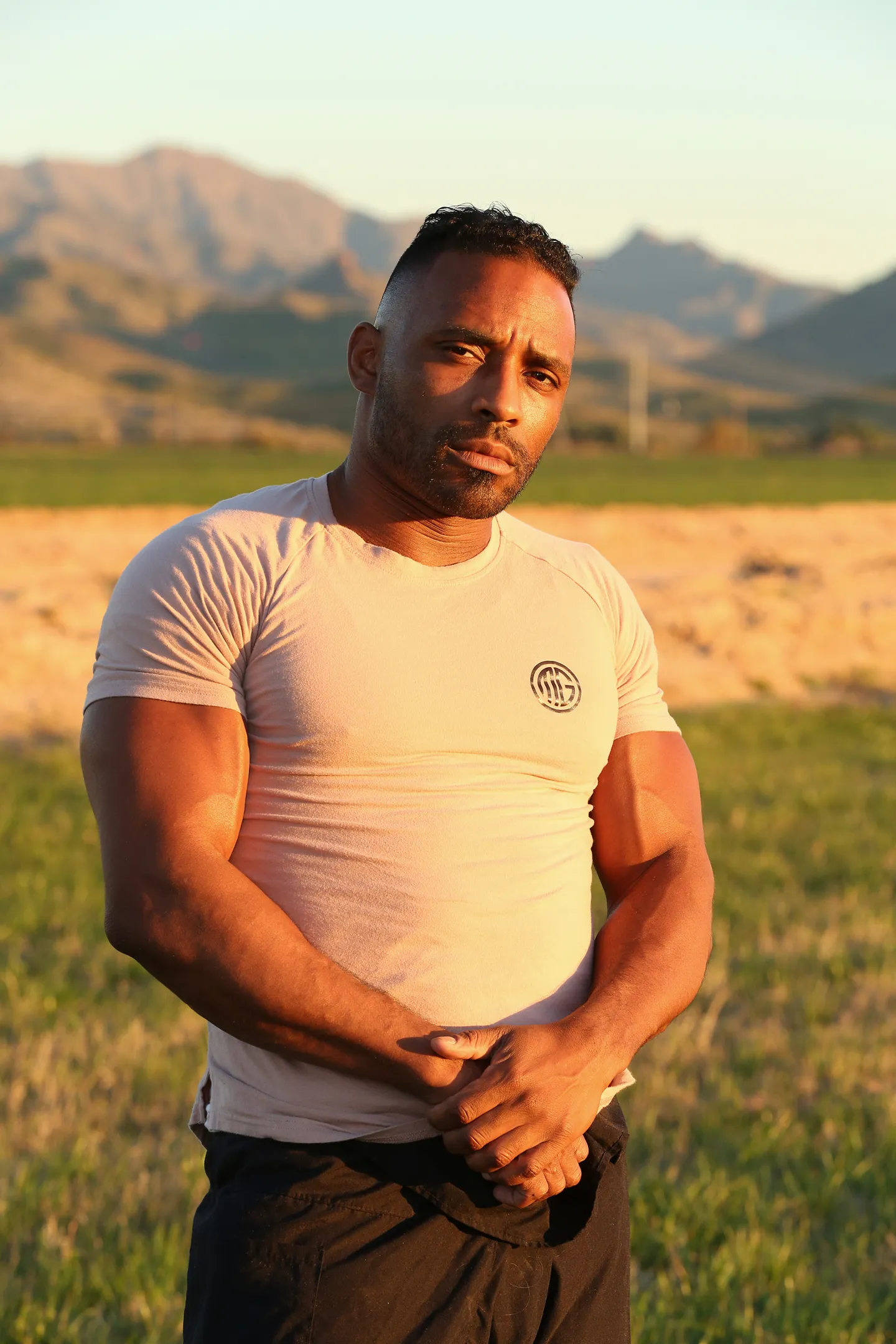
He is the result of his own protocols. PEB is the bodywork half of that system.
Apprenticed to a Kung Fu Grandmaster in 2010 and trained in Traditional Chinese Medical Qigong, De’Maris built PEB over more than a decade of bodywork, personal training and NLP. He runs three bodywork lines in Phoenix (Athlete Supreme, Optimal Aura and Essential Revival), and his own DEXA scan puts his bone density, muscle density and weight distribution in the top 1%.
He’s in the room for every session, with one assistant for every six students.
Read his story →Investment
$895
$795 if you book 30+ days out
Best value
$1,995
or 4 payments of $525 · saves $290
$1,095
$995 early bird · Level 1 required
Founding Cohort · 12 seats
Full Certification Path at founding pricing. You agree to be filmed for the course library and to record a short testimonial at Certification Day.
Founding Cohort · January 2027
Founding seats go to the list first, before enrollment opens to the public. You’ll also get The 3 Laws of Touch, free.
No spam. Unsubscribe anytime.
Questions
No. Licensed therapists, trainers, coaches and partners all train together. A PEB certificate is continuing education, not a license to practice massage. In Arizona and most states, hands-on bodywork for pay requires a state massage license.
We’re applying for NCBTMB Approved Provider status, which Arizona accepts. Level 1 is submitted for 18 hours and Level 2 for 19, all in person. Approval is pending — we’ll update this page and every student the day it comes through.
Yes. Level 1 stands on its own and you leave with a full seated, side-lying and prone flow. Level 2 requires Level 1. Certification requires both weekends plus 40 logged practice hours.
Six to eight weeks of guided practice inside PEB Academy: the video lessons for what you just learned, a weekly live lab, and form checks where you post a short clip and get one specific fix back.
The Full Certification Path is $1,995 paid in full or four payments of $525.
Every session that touches the neck, abdomen or front of the hip starts with a screening protocol. There are no high-velocity thrusts anywhere in PEB. Adjustments are slow, leverage-based and always inside the client’s comfort.
Life happens. Miss a weekend for illness and you re-sit the missed sessions at the next cohort free. Alumni can re-sit any weekend at 50% off, space permitting.
Comfortable clothes you can move and lie down in, a water bottle, and a notebook. Tables, linens, bolsters and your Student Manual are provided.
Want to feel the work before you learn it? Book a PEB session or read PEB, explained.